44.7% of leads arrive outside core hours: Ghiraldo & Autoin's MIA case
In the first half of 2026, almost one in two observed leads arrived in lower-coverage time bands. The project shows why replying is not enough: context and a clear BDC handoff matter.
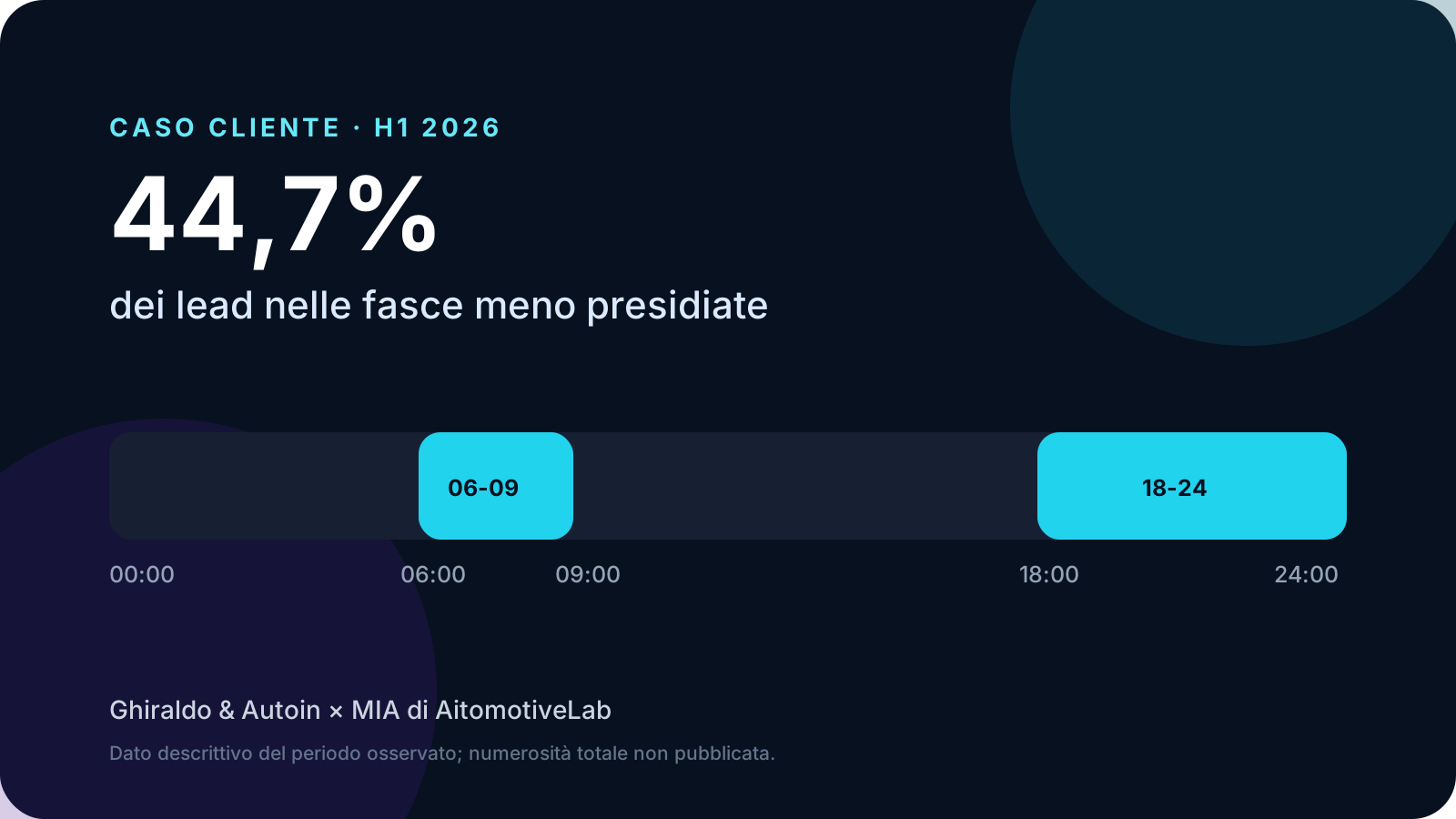
Ghiraldo & Autoin shares early MIA data: in H1 2026, 44.7% of observed leads arrived between 06:00–09:00 or 18:00–24:00.
Customers do not plan their interest around dealership opening hours. They ask when they see the right vehicle, have time to discuss a trade-in, or want to book a test drive. A website that is technically online all day does not solve that gap if a 22:30 request receives only an acknowledgement.
That is the starting point of the work between Ghiraldo & Autoin and MIA, AitomotiveLab's AI agent embedded in the dealership website. The goal is not to add another chatbot. It is to shorten the distance between customer interest and the moment the BDC has enough context to act.
"Customers do not know our opening hours. They only know when they need us."
— Ghiraldo & Autoin
What the 44.7% figure tells us
In the first half of 2026, Ghiraldo & Autoin found that 44.7% of the leads observed in the project arrived between 06:00 and 09:00 or between 18:00 and 24:00. These are lower-coverage bands at the edges of normal operations, when customer availability and team coverage do not necessarily overlap.
This is a descriptive figure, not a sales-uplift metric. The total sample size has not been published, and the percentage does not prove that MIA generated those leads. It does show when a meaningful share of demand appears and why response cannot depend entirely on staff availability.
Capture: be present when the request starts
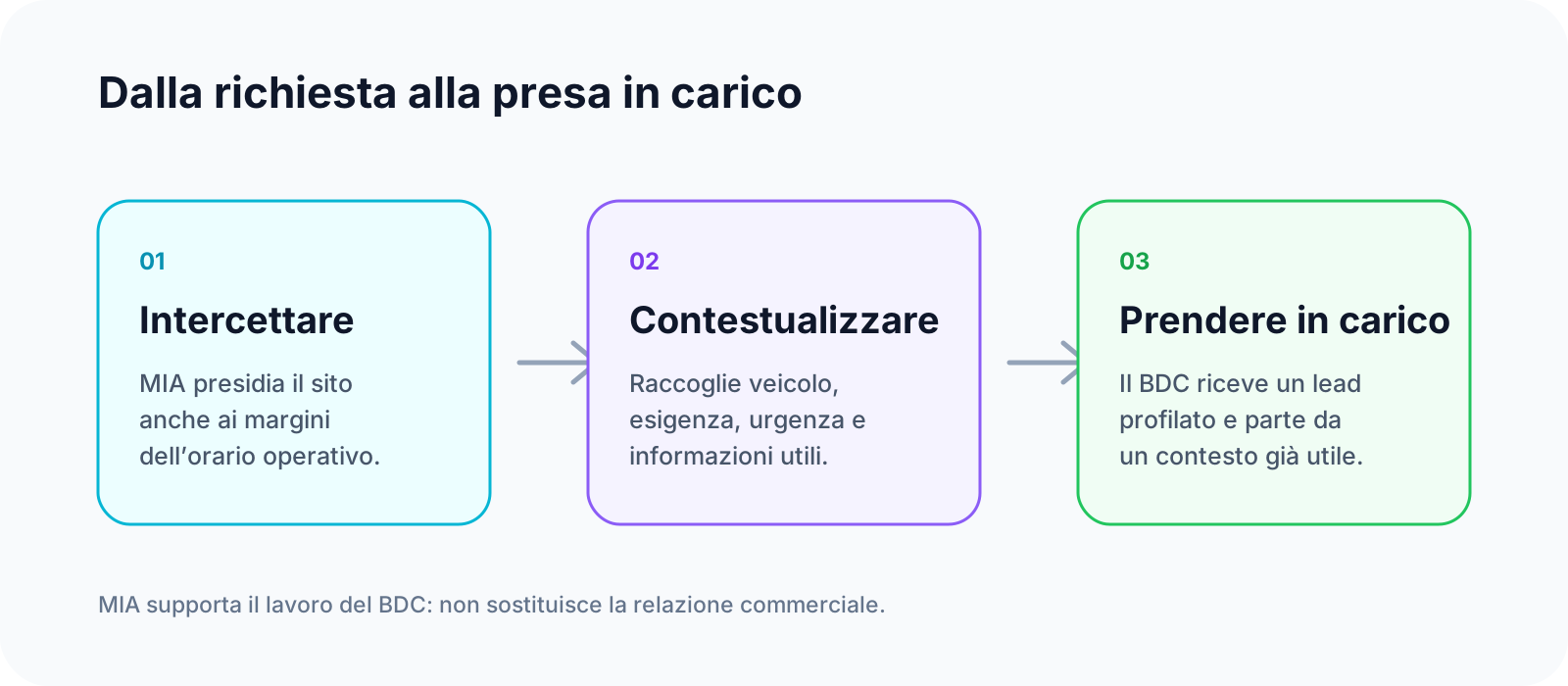
MIA first keeps a useful conversation open before the BDC starts, after it closes, or during reduced coverage. The customer can begin from the vehicle page they are viewing and receive a contextual response instead of stopping at «we will call you back».
Contextualize: move beyond a name and phone number
A contact detail does not explain why the customer wrote. MIA can collect the vehicle of interest, request type, urgency, trade-in information, and preferred next step. The BDC receives a conversation with usable context rather than an isolated row in a queue.
- Source page or vehicle
- Customer need and information already collected
- Urgency and preferred contact channel
- Test-drive, appraisal, appointment, or callback request
- Conversation history for BDC handoff
Own: hand the qualified request to the BDC
When the BDC takes over, the team does not need to rebuild the request from scratch. Ghiraldo & Autoin has also started measuring this stage: during high-coverage periods, ownership can happen in around five minutes, while night-time requests naturally create longer intervals.
That variation is exactly what matters. Capturing an opportunity is only the first step. Operational value emerges when the correct team receives, reads, and progresses it with continuity. MIA does not replace the BDC; it prepares its work and reveals where an opportunity risks going cold.
What to measure next
- Requests by time band and channel
- Time to the first meaningful conversation
- Completeness of the context delivered to the BDC
- Time to team ownership
- Appointments and commercial outcomes by source
The first figure shared by Ghiraldo & Autoin makes a common dealership problem tangible: demand does not concentrate in the hours that are easiest to cover. Capture, contextualize, and own are three parts of one flow. MIA connects them while people continue to create value in the relationship.