Chat and form leads: how to measure quality and intent
Chat and forms capture different signals. A useful comparison measures contact, appointments, and outcomes over the same period without assuming which channel converts better.

Forms and chat capture different information. Here is how to compare context, useful contacts, appointments, and sales outcomes using dealership data.
A decent form collects a name, a phone number, maybe a model. Then sales calls cold, often the next day, and finds out the person was «just looking» — or already spoke to another dealer.
In chat, a customer can state the vehicle, price question, trade-in, or test-drive availability before handoff. In flows managed with MIA, this provides more context than a contact-only form. Greater purchase intent cannot be assumed, however; it must be measured from each dealership's outcomes.
"A form gives you a contact. Chat gives you intent."
— AitomotiveLab
What «quality» actually means on a lead
Quality is not «they left a number». Quality is how much work sales still has to do before knowing whether the contact is worth pursuing. Forms and chat do not start even.
- A form says who they are. It almost never says what they want, how urgent it is, or whether they have a car to trade in.
- Chat surfaces model, trim, budget, timing and objections while the person is still there.
- A form waits for a callback. Chat keeps the thread in the same minute, including after 7pm.
- At handoff, the salesperson reads a history. They do not have to call cold to rebuild context.
That is why chat leads «close» the first contact more often. Not because chat is magic. Because qualification already happened, in natural language, before the desk picks up the name.
Why someone who writes is already further along
Filling a form is a low-cost act: leave a callback number. Opening a chat costs more. The person has to ask a question, wait, continue. They usually have a concrete reason: that Golf in the window, that monthly payment, that service booking, that «can I come on Saturday?».
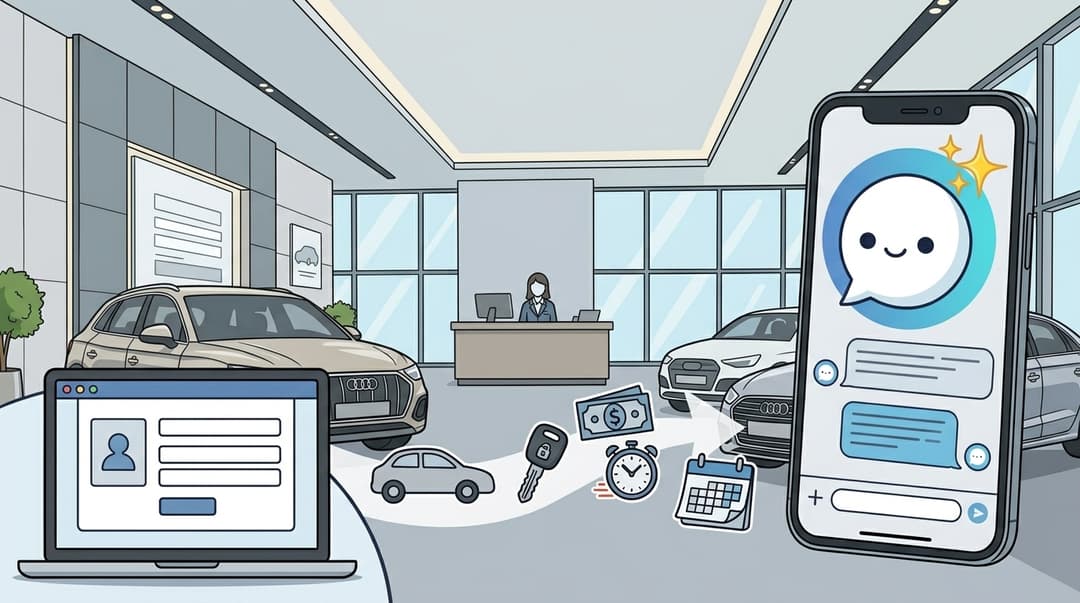
If the agent knows inventory, the gap widens. MIA can show the real vehicle, availability and price, and move the person toward an appointment instead of closing with «we will call you back». A form, on its own, does none of that.
Do not kill the form. Put it in the right place
Forms still matter: campaigns, landing pages, people who do not want to type. The problem starts when the form is the only way in and every name lands in the same CRM pile, with the same priority.
A form lead needs warming. A chat lead, if the conversation was done well, needs ownership. Treating them the same wastes sales time on cold names and lets the ready ones go cold.
- Keep the form for people who only want a callback.
- Keep chat — web and WhatsApp — for people who already have a commercial question.
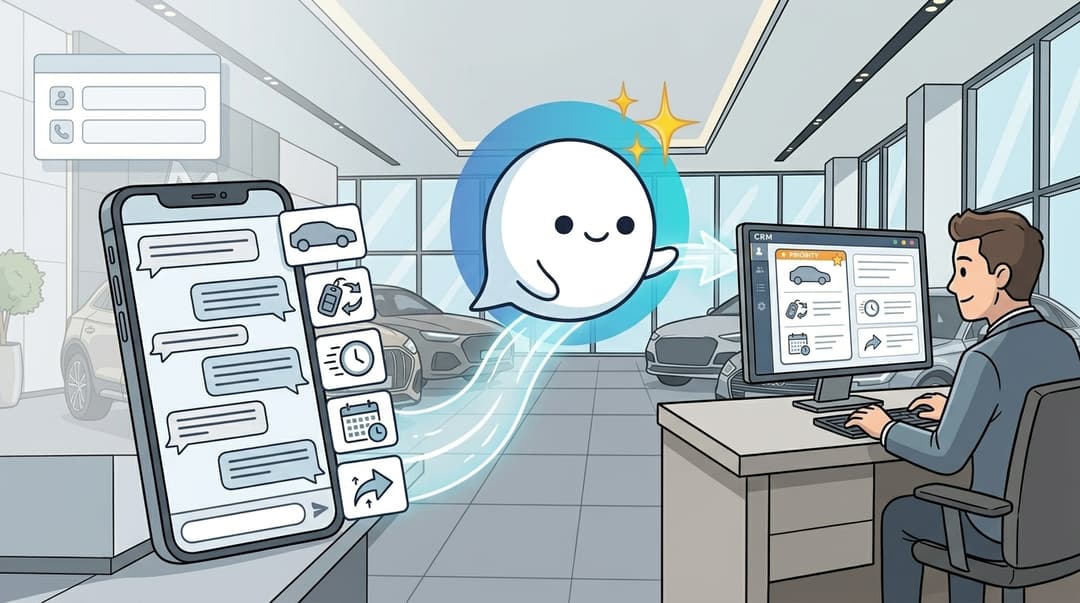
- In the CRM, split them: source, vehicle, urgency, conversation notes.
- The desk should see hot threads first, not the list in arrival order.
What the agent must do so the lead stays warm
A quality chat is not an FAQ. If the agent answers «for the price, the desk will call you», you have only moved the form inside a bubble. You need the same work as a BDC: the right questions, real stock, a clear next step.
- Know which page or listing the person came from, and which car they are asking about.
- Qualify with the dealership's rules: trade-in, budget, urgency, sales or service.
- Offer an appointment, a test drive or a callback in a real slot.
- Hand the thread to a salesperson on the same channel, with notes already written.
That is the job MIA exists for: the AI webchat on the site and lead management for the BDC. Not to «have a chat on the site». To get a contact to the team who has already spoken, already chosen a car, and already said when they can come in.
How to see it in your store, without a long report
You do not need an observatory. Two piles, for two weeks: form leads and chat leads (web + WhatsApp). On each, the desk marks useful contact, appointment and commercial outcome.
The comparison shows which source produces more useful contacts and appointments in the dealership's real process. Forms remain useful; chat adds context when a customer wants to ask a question. Priority should be based on measured outcomes, not the channel name.
FAQ
FAQ: chat leads vs form leads
The questions dealers ask when they compare WhatsApp, web chat and the website form.
Want the desk to receive leads already in a deal?
We will show you MIA on web and WhatsApp: how qualification happens in chat, what lands in the CRM, and why those names arrive warmer than a form.