MIA · Lead management

Dealership lead management: from request to team ownership

Generating contacts is not enough. The operational gap appears when web, marketplaces, WhatsApp and phone create separate queues with different response times and context. MIA turns the first request into a qualified conversation and an orderly handoff.

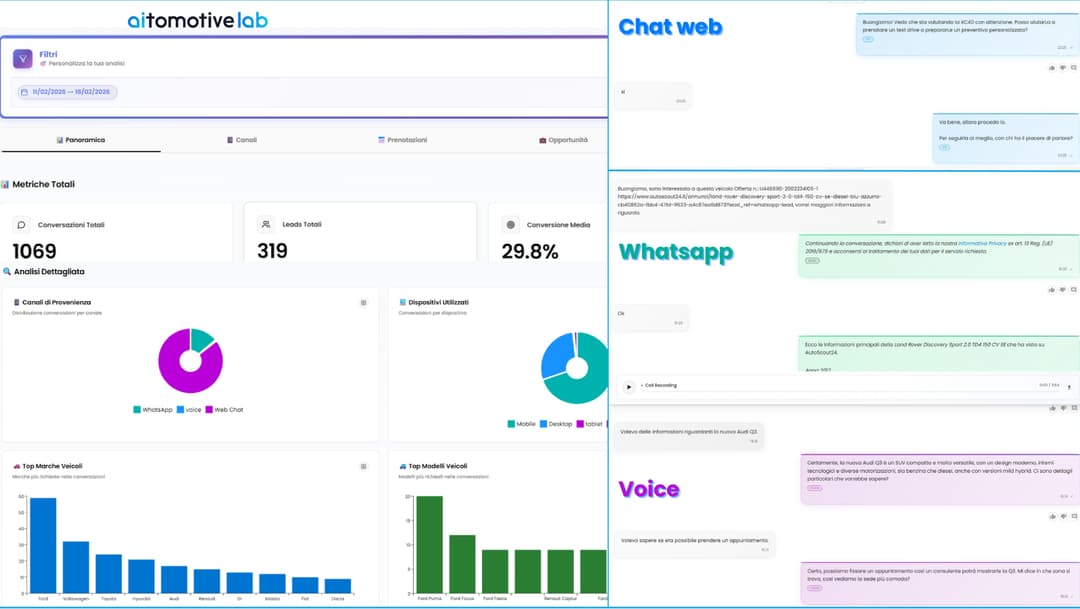
MIA dashboard with conversations, leads, and channels next to webchat, WhatsApp, and voice history
The MIA dashboard: leads, channels, and bookings in one view, with the history of every conversation.

First contact → qualification → handoff

WhatsApp automation in dealerships

On WhatsApp the lead sequence is the same: first contact, qualification, BDC handoff with history. The operational guide lists steps, checklists and owners.

WhatsApp automation in dealerships →

Customer case · Ghiraldo & Autoin

44.7% of observed leads arrived after hours

H1 2026 on the Ghiraldo & Autoin website. The figure shows when demand appears — not a sales uplift. Total sample size has not been published.

Read the case study →
01

Where dealership leads get lost

Requests arrive during peaks and outside staffed hours. If the customer only receives an acknowledgement and sales must rebuild context the next day, intent quickly cools.

Good lead management starts with response speed but requires vehicle, urgency, trade-in and next-step context.

  • Separate channels and fragmented alerts.
  • Contacts without visible intent or priority.
  • Manual follow-up and untracked handoffs.
  • Variable ownership times outside BDC coverage.
02

How MIA qualifies a request

MIA works across the website, WhatsApp and voice using dealership rules. It can identify the vehicle, collect the required details, understand trade-in needs and propose the expected next step.

Qualification adapts to page, channel and intent, with a human handoff available whenever judgment is required.

03

BDC and CRM handoff

Qualification only retains value when the team receives the conversation and notes rather than a phone number. MIA can synchronize data, status and next activities with the existing CRM.

The BDC remains responsible for relationships, negotiation and exceptions; AI reduces repetitive first-level work.

On WhatsApp the sequence is the same: first contact, qualification, handoff. Steps and ownership are in the operational guide to WhatsApp automation in dealerships.

  • Source page or listing context.
  • Details and preferences collected.
  • Agreed callback, appointment or test drive.
  • Human handoff with conversation history.
04

KPIs that show whether the flow works

Automated-message volume is not the result. Measure time to meaningful conversation, profile completeness, team ownership, appointments and outcomes by source.

A baseline split by time and channel shows where automation actually reduces the distance between customer interest and sales action.

Lead management FAQ

Operational questions about leads, BDC and CRM

What to clarify before adding an AI agent to the sales process.

No. MIA manages conversation, qualification and team handoff; it can connect to the existing CRM to synchronize context, status and activities within the agreed integration.

Start with a baseline by channel and time range. Useful KPIs include time to meaningful conversation, profile completeness, team ownership, appointments and commercial outcomes. Automated-message volume alone is not a result.

No. The agent can cover first contact under configured rules, while the BDC owns relationships, negotiation and exceptions. Human handoff retains the conversation and collected details.

Want to review your dealership lead flow?

In a demo, we map channels, qualification rules, handoff and integration with your current CRM.

Request a MIA demo