Automotive leads: where they come from and why dealers lose them
Website, marketplaces, OEM, phone, WhatsApp, service lane, trade-ins: dealers know where car sales leads come from. The weak point is usually what happens after the lead arrives.
The main sources of automotive leads, what makes a lead good, and the part most lists skip: where dealers lose leads after they arrive, and how to measure it.
Most advice on automotive leads is a list of ways to get more of them. That is a fair question, but it should come second. The first question is simpler and less comfortable: how many leads already reach your store and are never worked properly?
This guide covers where car dealership leads come from, what makes a lead worth chasing, where dealers lose leads after they arrive, and what to measure so you can tell the difference.
What are automotive leads?
Automotive leads are requests from identifiable people who show interest in a vehicle, a trade-in, finance or service: a web form, a phone call, a chat or WhatsApp message, a marketplace inquiry or an OEM referral. A lead is not a sale and not an appointment. It becomes an opportunity only when someone responds with something useful and moves it to a next step.
Where car sales leads come from
The sources are not a secret. What changes from store to store is the mix, and how well each source is handled.
- Website and VDP forms: quote requests, test-drive bookings, availability checks on a specific vehicle detail page.
- Website chat: the same visitor, but asking a question in their own words instead of filling fields.
- Marketplaces and portals: AutoTrader, AutoScout24, coches.net and similar. The customer writes about one listing.
- OEM leads: requests from brand configurators and national campaigns, passed down to the dealer.
- Phone calls: about a car seen online, a delivery date, a service booking. Still the channel where people expect an answer right away.
- WhatsApp and messaging: written questions, often in the evening, often with photos of the trade-in.
- Service-to-sales: service customers with an older car, a large repair estimate or a lease coming to an end.
- Trade-in and valuation tools: someone asking what their car is worth is often thinking about replacing it.
- Social and paid campaigns: high volume, very mixed intent. Useful if the follow-up is quick.
- Referrals and repeat customers: few, usually the easiest to close, and easy to neglect because they feel safe.
On marketplaces, the first thing a shopper judges is the photos. Consistent photos, published quickly, are a condition for getting inquiries on a listing, not a guarantee of them. For guided capture and publishing of stock photos there is CarTake. The rest of this guide is about what happens after the click.
Which types of leads matter most?
There is no universal ranking. A useful way to sort them is by how much the customer has already told you. A marketplace message on a specific listing, a call about a car seen on the website or a trade-in valuation already carries a vehicle and a reason. A lead from a broad social campaign often carries only a name. Both can turn into sales, but they need different handling and different expectations.
OEM leads and marketplace leads also come with a clock: the customer has usually contacted more than one dealer, and the first useful answer sets the tone. Service-to-sales and referral leads move slower, but the customer already knows the store. Rank your own sources by outcome in the CRM, not by how many names each one produces.
What makes a lead good
A good lead is not one that left a phone number. It is one where the salesperson knows what to do next. In practice that means:
- A specific vehicle or service, not a generic «more info».
- Contact details that work, and a preferred channel.
- Timing: this week, this month, or just looking.
- Trade-in, budget or finance, if the customer has already mentioned them.
- A possible next step: test drive, appraisal, callback at a set time.
The format matters. As covered in chat vs form leads, chat can capture the vehicle, timing, trade-in and objections during the conversation, while a form often starts with a few fields. That does not prove that one channel converts better. It means they should not sit in the same CRM pile with the same priority, and that the comparison has to be made on each dealership's own outcomes.
Where dealers lose leads after they arrive
This is the part the usual lists skip. A lead that arrives is not a lead that gets worked. The common leaks are operational, not marketing problems.
After-hours requests
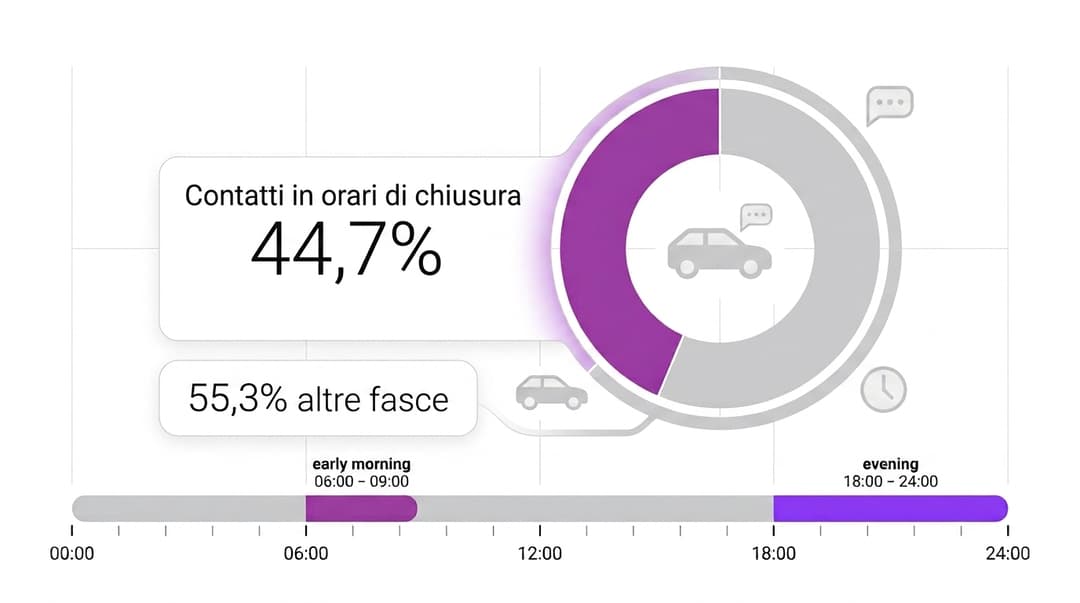
Customers do not plan their interest around showroom hours. At Ghiraldo & Autoin, 44.7% of the leads observed in the first half of 2026 arrived between 6am and 9am or between 6pm and midnight. That is one dealer's share for that period, not an industry figure and not a before/after result. It does show how much demand can land when the team is thin or gone.
Slow or empty first response
An auto-reply saying «we will get back to you» is not a response. It answers no question and gives no next step. By the time a person calls the next morning, the customer may have written to two other dealers on the same marketplace.
Missing vehicle context
The salesperson calls back without knowing which car, which listing, which trade-in. The first minutes of the call go into rebuilding what the customer already said, and the customer notices.
No follow-up and wrong routing
One unanswered call and the lead sits untouched in the CRM. Or a service question lands in the sales queue, and a sales question in service. Nobody owns it, so nobody closes it.
Fixing these is less about buying more volume and more about deciding who responds, how fast, with what information, and who owns the lead after the first reply. That is the job of a dealership BDC, whether it is a team of people, people supported by an AI agent, or both.
How to get more car sales leads without buying more
- Cover the hours when requests actually arrive, not just the hours the showroom is open.
- Make the first response useful: answer the question, confirm the vehicle, offer a slot.
- Open the channels people already use: website chat and WhatsApp next to the form, not instead of it.
- Flag service customers who are candidates for a new or used car, and pass them to sales with context.
- Treat every trade-in valuation as a possible sales lead, not only a used-car purchase.
- Set a follow-up rule: how many attempts, on which channels, over how many days.
How to measure automotive leads
Lead count on its own says little. Track these by source (website, marketplace, OEM, phone, WhatsApp, service, campaigns):
- Speed to first useful response: the first reply that moves the request forward, not the auto-reply.
- Contact rate: how many leads led to a real conversation.
- Appointments set, and appointments shown.
- Sales outcome by source, so you know which source pays back its cost.
- Leads by time of day and channel, to see where coverage is missing.
Two or three weeks of these numbers usually show where the value leaks. Often the first fix is in the process, not in the media budget. If one source has a high lead count but a low contact rate, look at response time and channel before cutting the spend. If appointments are set but not shown, look at confirmation and reminders. If outcomes differ sharply between daytime and evening leads, the problem is coverage, not the source.
Where MIA fits
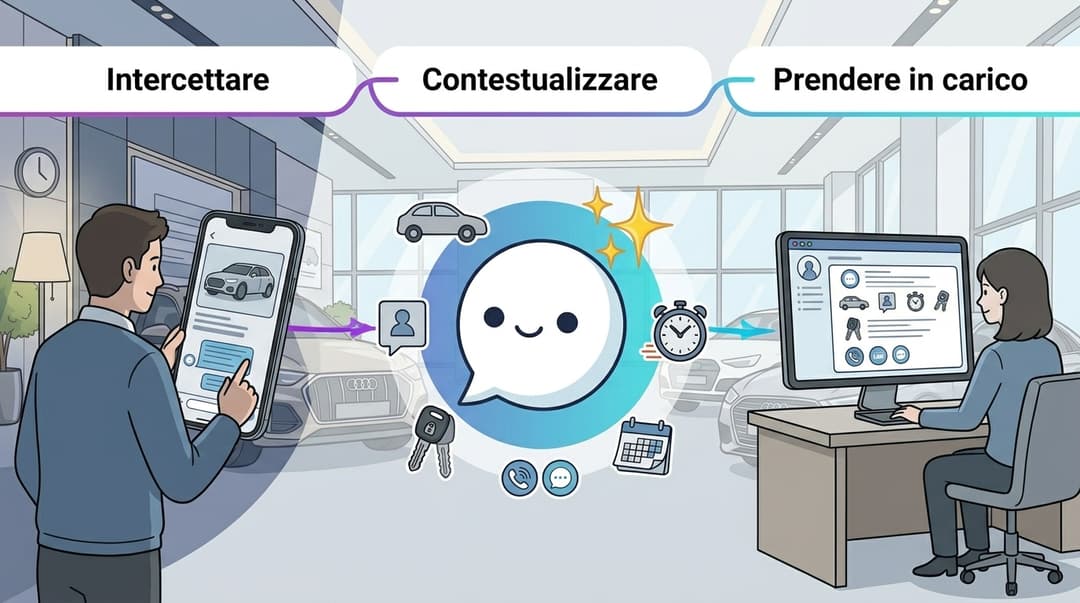
MIA is AitomotiveLab's AI agent for dealerships. It replies on the website and WhatsApp, including after hours, collects the vehicle, need, timing and trade-in, and hands the team a request with the context already written. The BDC keeps ownership of the customer relationship. More detail on automotive lead management with MIA.
FAQ
FAQ: automotive leads
The questions dealers ask most about lead sources, lead quality and lead handling.
Want to see how many leads you lose after they arrive?
We will show you how MIA answers on the website and WhatsApp, gathers context and prepares the BDC handoff.