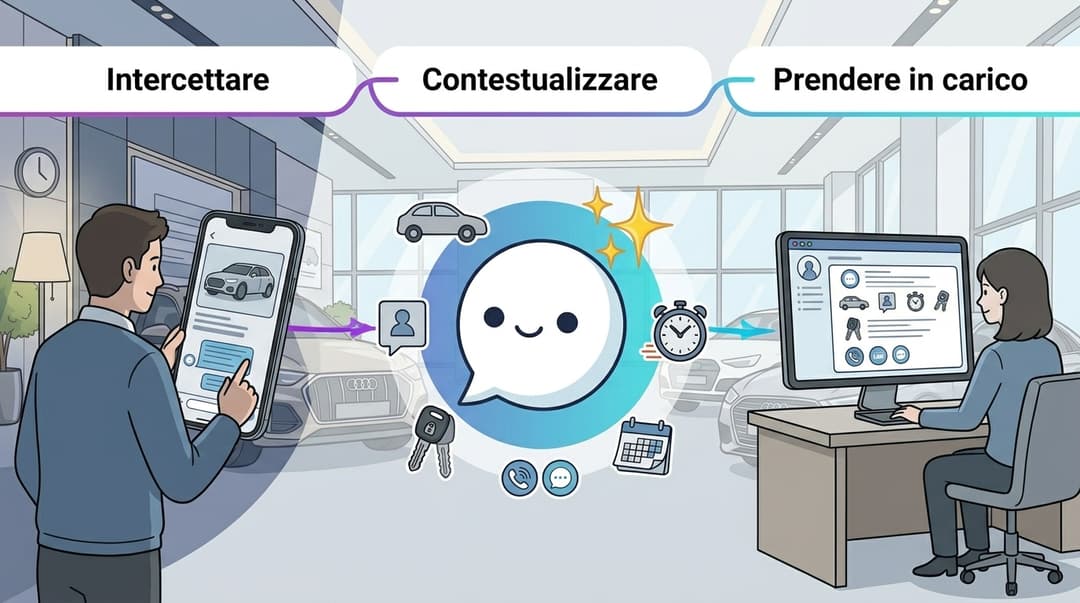
Lead nurturing for car dealerships: what it is and 5 flows to set up
Unreached leads, unanswered quotes, test drives, stock arrivals and lost customers: five flows across WhatsApp, email and AI calls, with the rules that keep them from turning into spam.
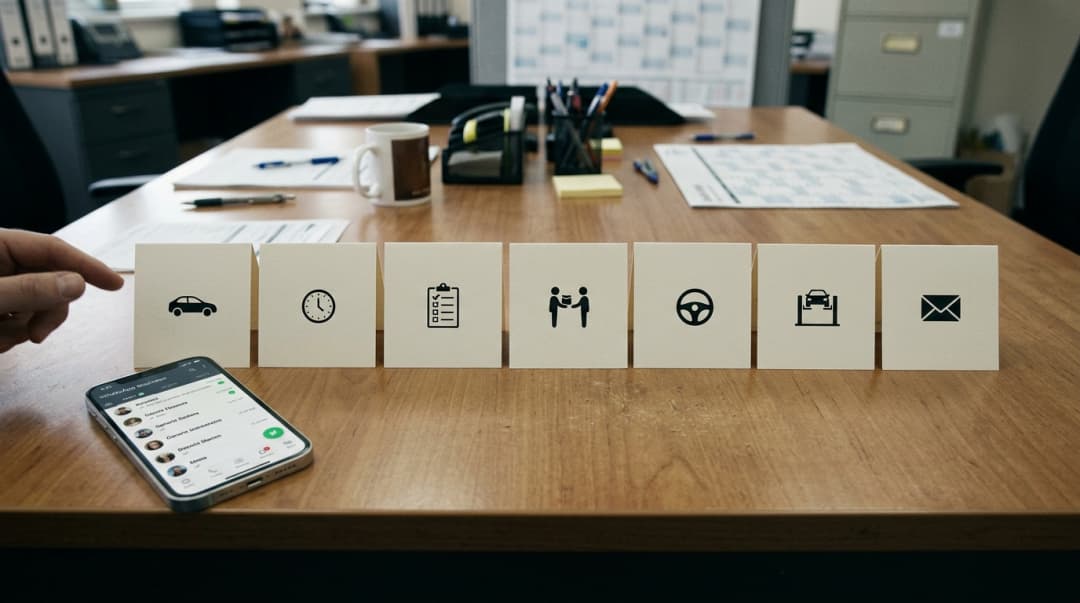
What lead nurturing is and how to run it in a dealership: five flows tied to real CRM events, channels, handoff to sales, what to measure and the mistakes to avoid.
Most dealership leads are not ready to buy the day they arrive. Someone fills in a form on a Tuesday night, gets one call on Wednesday, misses it, and the lead goes quiet. Lead nurturing is the work of staying in touch until that person is ready, without burning them out. This guide explains what lead nurturing is, why dealerships need it, and five flows you can switch on, each tied to a real event in your CRM.
What is lead nurturing?
Lead nurturing is a planned series of contacts that keeps a prospect engaged from first enquiry to purchase, each one triggered by what the person did or did not do. In a dealership that means a follow-up when a lead hasn't been reached, a reminder when a quote gets no reply, a message when the car they wanted arrives. The goal is simple: get the right person back in front of a salesperson at the right moment.
Nurturing is not a newsletter sent to everyone. Every message has a reason, a trigger and a stop condition. And automated lead nurturing does not replace salespeople: it does the repetitive chasing so they spend their time on people who are ready to talk.
Why dealership leads need nurturing
- Leads arrive when nobody is at the desk. At Ghiraldo & Autoin, in H1 2026, 44.7% of observed leads arrived between 6 and 9am or between 6pm and midnight. That is their share for that period, not an industry figure, but it shows how many first contacts land outside office hours. Read the full case.
- Buying a car takes weeks. Between the first enquiry and the signature there are test drives, trade-in, finance and family discussions. A single follow-up call doesn't cover that.
- Leads come from many sources: website forms, marketplaces, Facebook and Instagram Lead Ads, WhatsApp, phone. Without a shared process, some get three calls and some get none.
- Salespeople prioritise hot leads, and they should. The warm and cold ones need a system, or they simply disappear.
We cover the full lead journey, from source to appointment, in our guide to automotive leads.
5 lead nurturing flows for dealerships
Each flow below is built on a trigger that already exists in a dealership CRM. In MIA these are journeys that combine WhatsApp templates, email and AI voice calls, with steps that react to what the customer does: replied, clicked a button, didn't answer the call, no reply after a set time.
1. New lead not reached: WhatsApp first, then a call
Trigger: a form is submitted, or a lead comes in from Lead Ads. Within minutes the customer gets a WhatsApp template that names the car they asked about and offers two quick-reply buttons. If they reply, the AI continues the conversation, answers questions from stock and proposes a test drive. If there's no reply within the window you set, an AI call follows. The call can retry on no answer or busy, detect voicemail and leave a short recorded message.
Stop condition: the customer replies, books, or asks to be contacted by a person.
2. Quote sent, no reply: a short reminder
Trigger: the opportunity moves to the "quote sent" stage and stays there past its SLA. The customer receives one reminder with a button: "I have a question" or "Call me". A click on "Call me" creates a task for the salesperson, or starts an AI call if that's how you've set it up. No reply? One more attempt at most, then the lead goes to a view the sales manager reviews.
Keep the price conversation human. The reminder reopens the dialogue; it doesn't renegotiate.
3. After the test drive: follow-up while it's fresh
Trigger: the test drive appointment is marked as done, or the opportunity moves to the matching stage. The next day the customer gets a message asking how it went, with buttons for the usual next steps: see an offer, talk about trade-in, book a second visit. The AI collects trade-in details (make, model, plate, mileage) for the used-car manager, who does the valuation. If the customer didn't show up, a different branch offers a new slot.
4. "The car you wanted has arrived": stock-match alerts
Trigger: a vehicle matching what a customer asked for arrives in stock. This flow only works if the vehicle of interest was recorded in the first place, which is why lead capture matters. The customer gets a template with the car, and the AI picks up the conversation if they reply: availability, price, test drive booking. It's one of the most useful flows because the message is about something the customer actually asked for.
5. Reactivating cold and lost leads
Trigger: a scheduled run on a segment. RFM segmentation (Champions, Loyal, At risk, Lost, Never purchased) and CRM views let you pick who to contact and with what offer: a brand promotion for people who never bought, a service or trade-in campaign for past customers. Reactivation works well as a voice campaign: the AI call follows a script built from the promotion brief, records an outcome for each contact (interested, not interested, no answer, callback) and respects voice opt-outs.
Channels: WhatsApp, email and AI calls
- WhatsApp: the fastest channel, and the one with the strictest rules. To start a conversation or write after 24 hours from the customer's last message, you need a template approved by Meta and the customer's opt-in. Inside the 24-hour customer service window you can reply freely, which is when the AI can hold a real conversation. More on WhatsApp campaigns for dealerships.
- Email: good for longer content (offer details, documents) and for customers who prefer it. Replies come back into the same conversation, and every send needs an unsubscribe link.
- AI calls: the strongest nudge for leads that don't read messages. Use them after a silent WhatsApp, not as the first touch for everyone. See how AI outbound calls for dealerships work.
Meta charges for template messages; check the current rates on Meta's official pricing page before you plan volumes. For practical WhatsApp setups, see 7 WhatsApp automation workflows for dealerships.
When to hand the lead to a person
A nurturing flow should know when to step aside. Hand off when:
- The customer asks for a price, a discount or a finance quote.
- They want a trade-in valuation. The AI collects the details; a person values the car.
- They click "Call me" or the AI records the outcome "interested".
- They're unhappy, or the question is outside what the AI is allowed to handle.
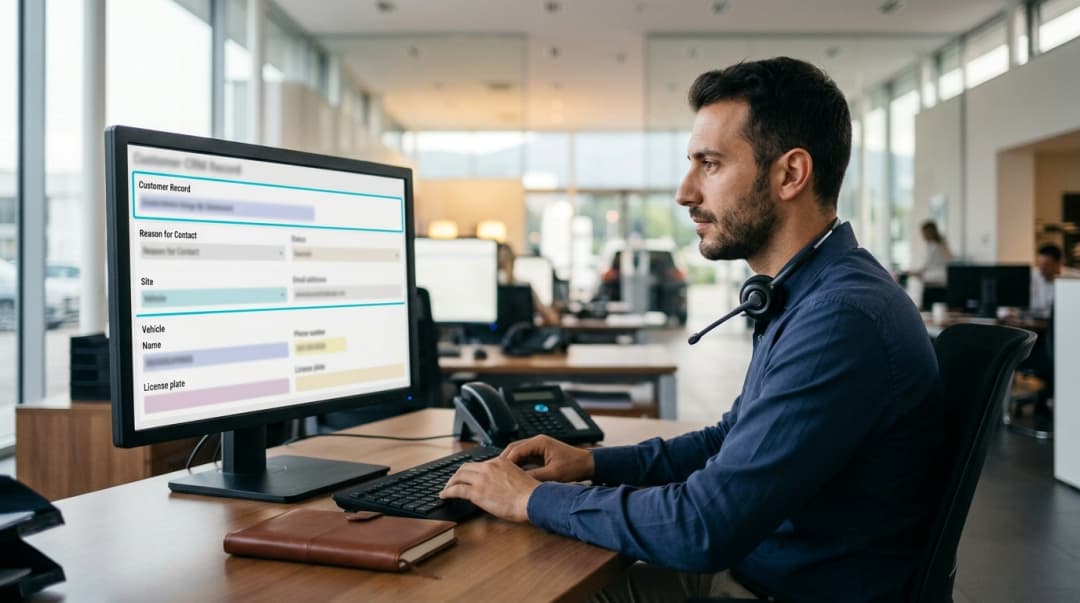
When a salesperson takes over a conversation, the AI stops. After a template is sent, the AI can also pause for a set time so the salesperson can follow up personally. Whoever picks up the lead sees the full history, a summary and the vehicle of interest.
What to measure
- For each step: sent, delivered, read or opened, replied, buttons and links clicked.
- For each flow: appointments booked, leads handed to sales, outcomes recorded on calls.
- Time from new lead to first contact.
- Opt-outs and unsubscribes. If they rise, you're sending too much or the wrong message.
- A/B tests on the opening message or on the order of channels, one change at a time.
Measure flows against appointments and sales handed off, not against messages sent. A flow that sends a lot and books nothing is noise. Dealership lead management explains how MIA tracks leads from first contact to outcome.
Mistakes to avoid
- Spam: too many messages, too close together. Two or three touches per flow is usually enough.
- No consent: writing on WhatsApp or calling someone who didn't opt in. It's a legal risk and it hurts your number's quality rating with Meta.
- No stop condition: the flow keeps sending after the customer has replied, booked or bought.
- No coordination with sales: the salesperson calls while the flow sends a reminder, and the customer hears from you twice in an hour.
- Generic messages: "Are you still interested?" without the car, the date or a reason to reply.
- One flow for everyone: a lost customer from three years ago and a lead from last week need different messages.
How to get started
Start with flow 1. It's the one with the most immediate effect, because every dealership has leads that were never reached. Set the stop conditions, decide who gets the handoff, run it for a few weeks and read the report. Then add the stock-match alert and the quote reminder. Reactivation comes last, once you trust your consents and segments.
FAQ
Lead nurturing questions
The most common questions from dealership teams setting up automated follow-ups.
Want to see these flows on your leads?
In a demo we set up a real flow with you: unreached lead, WhatsApp, AI call if there's no reply, and handoff to sales.