A day as a BDC representative at a car dealership
From overnight chats to the lunch gap, from warm call transfers to the end of the shift: what a BDC rep actually does, hour by hour.
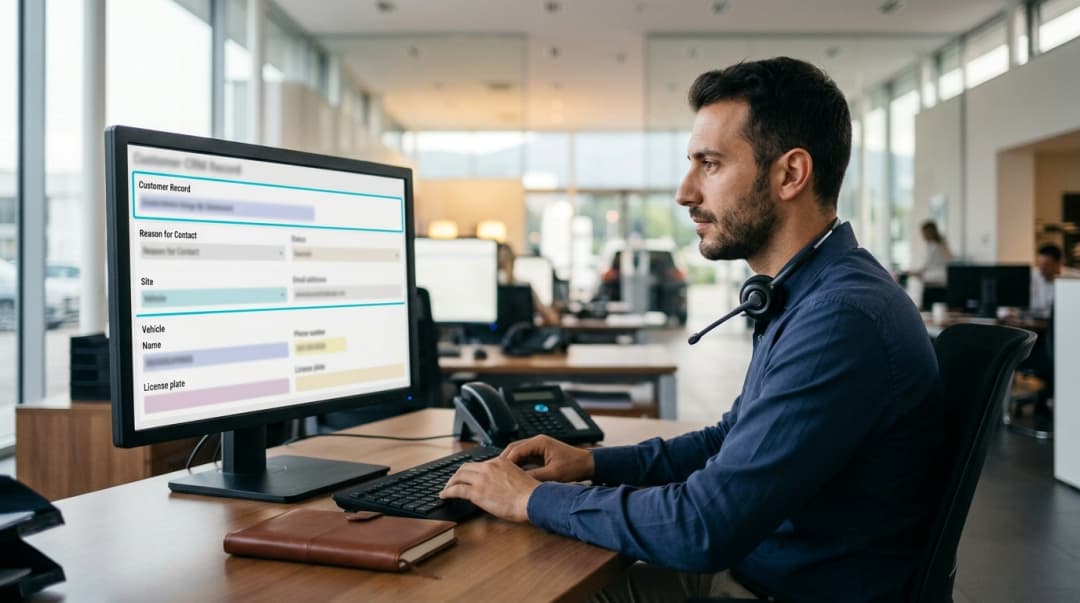
What a BDC representative does at a car dealership, told through one working day: overnight chats, trade-in questions, warm transfers, lunch cover and end of shift. Plus skills, KPIs and how AI changes the role.
It's 8:30 on a Tuesday. Maya sets her coffee next to the keyboard, puts on her headset and opens the inbox. She's a BDC representative at a mid-sized dealership: two franchises, a service department, six salespeople. Her job, in one line, is to make sure nobody who calls or messages goes unanswered, and that customers who are ready reach the right person with the right information. This is her day, hour by hour, along with what you need to know if you do the job, manage it or are thinking of applying.
What is a BDC representative at a car dealership?
A BDC representative (Business Development Center) handles the dealership's inbound and outbound customer contact: web chat, text and WhatsApp, email and phone. They qualify each request, set appointments and hand the customer to a salesperson or the service drive with a clear summary. They don't close deals or appraise trade-ins; their output is a booked appointment that shows and a clean handoff.
For the full picture of the department, staffing models and the workflow from first contact to the salesperson, see our guide: What is a BDC at a car dealership?. This article is the job seen from the inside.
8:30 a.m. – The night shift already happened
The first thing Maya checks isn't new messages. It's last night's. Not long ago that meant a pile of leads written at 11 p.m. by people who, by morning, had already asked another store.
Now the overnight conversations on the website and WhatsApp have been handled by the dealership's AI assistant. When a conversation goes quiet, the AI writes a summary, adds tags, creates or updates the customer and the opportunity in the CRM, sets priority and category (sales or service), flags whether a person is needed and marks the lead hot, warm or cold.
Maya filters for hot. There are four. A woman who asked for a Saturday test drive in a Tucson and left her number. A young guy asking whether he can finance with a small down payment: the AI didn't run numbers, it collected the details and passed it on. Two minutes of reading summaries and Maya knows who to call first.
Sales BDC vs service BDC representative
Job postings list both, and at smaller stores they're often the same person.
- Sales BDC representative: handles new and used vehicle leads, test drives, trade-in and finance questions. The goal is a showroom appointment that actually shows and a qualified customer handed to a salesperson.
- BDC service representative: handles service-side calls and messages, such as maintenance, warning lights, breakdowns, recalls and status checks. The goal is a well-organized service schedule and fewer calls landing on the service advisors.
- What they share: speed, accurate data, a calm tone with upset customers, and handoffs that don't make the customer repeat everything.
9:15 a.m. – A trade-in question, and a rule written in plain English
A WhatsApp message comes in: “I've got a 2017 Golf, about 75,000 miles. What would you give me for it if I buy the used one on your lot?”
The AI assistant doesn't give appraisals, and it shouldn't. It collects the trade-in details (make, model, plate, mileage), confirms the vehicle of interest and then applies a rule the BDC manager wrote in plain language: “wants a trade-in valuation.” The rule assigns the conversation to Maya and sends her a notification.
Maya doesn't get a vague “someone's on WhatsApp.” She gets a conversation with the details already collected. She takes over, introduces herself and invites the customer in to have the car looked at. On WhatsApp the customer gets no automatic notice that a person has stepped in, so she writes first, using her name.
10:00 a.m. – “Maya has taken over”
On the website, a customer asks in chat whether he can get a loaner during a long repair. Lots of variables, so Maya decides to answer herself. One click and she takes control: the AI stops, and the customer sees in the chat that Maya has taken over, with her name and avatar. No guessing who's on the other end.
Control is locked to her: a colleague can't jump into that chat without the permission to do so. When she's done, she clicks to re-enable the AI. If the customer writes again later, the AI picks up with Maya's messages in view, so it doesn't ask the same questions twice.
11:20 a.m. – A phone call, transferred with a briefing
A customer calls the main line while every salesperson is on the phone. The AI voice agent answers, learns that the caller already looked at a car and wants the salesperson who helped him. The routing rule says: transfer the call.
The caller hears a hold message and music. Before being connected, the salesperson hears a short spoken briefing: the customer's name, why he's calling, what's been said. Then the line opens. The transferred leg is recorded and the transcript sits in the inbox next to the chats. If the salesperson hadn't picked up, the AI would have come back to the caller and offered a callback.
For Maya, who also owns callbacks, that means something concrete: by late morning she knows who was helped and who is still waiting for a call, without sticky notes.
1:00 p.m. – Lunch, without the gap
At one o'clock the BDC empties out for half an hour. Historically that's when messages got lost: they came in, nobody saw them, and by two the customer had written to another dealer.
Maya had control of a chat when she stepped away. After a period of inactivity (ten minutes by default) she's released, but the conversation doesn't quietly slide back to the AI. It stays with the team, flagged “intervention requested,” until someone picks it up or re-enables the AI. Her colleague on cover sees it at the top of the list.
Meanwhile, anyone on WhatsApp or web chat who asks for a person gets a holding reply: a message saying someone is being found, plus a few buttons to sort the request straight away, for example sales, service or call me back. As soon as a rep replies, the automatic messages stop. Nobody is left hanging, nobody gets double answers.
3:30 p.m. – The salesperson replies from his phone
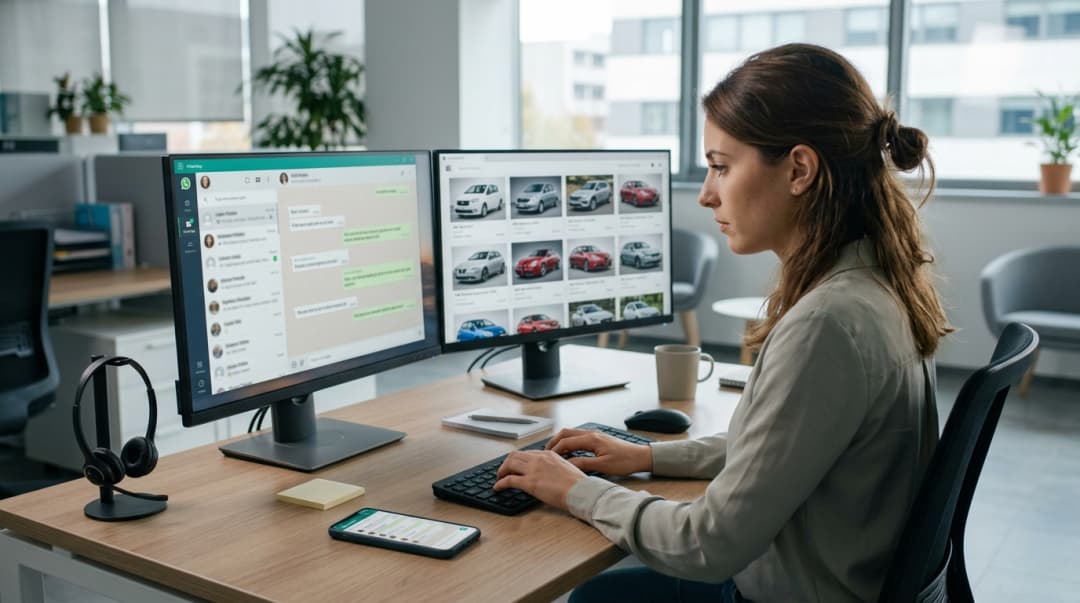
Andrew, one of the salespeople, has been working a customer who can't decide on a wagon. The customer messages the dealership's WhatsApp number and Andrew, out on the lot, replies from the WhatsApp Business app on his phone.
With Meta's Coexistence feature, the phone app and the AI work on the same number. Andrew's message shows up in Maya's inbox too, and the AI steps back on that conversation, so it won't talk over the salesperson. Coexistence availability depends on the Meta account setup and is checked before activation. How it works, and its limits, are covered in WhatsApp Business app and AI on the same number.
BDC representative skills
- Short, clear writing: three good lines on WhatsApp beat a paragraph.
- Phone skills: listen, summarize, ask one thing at a time, end with a concrete next step.
- Working knowledge of the product and the service department, without improvising technical answers or prices.
- CRM discipline: every contact gets an outcome, a next step and an owner.
- Knowing when to hand off: to a salesperson, a service advisor or a manager.
- Patience with upset customers, especially on the service side.
How a BDC representative is measured
You don't need dozens of metrics. A handful of concepts, measured the same way every time, is enough:
- Speed to first useful response: not the auto-reply, the first answer that actually moves the request forward.
- Appointments set: test drives, showroom visits, service bookings.
- Appointments shown: how many of those customers actually turned up.
- Handoff quality: did the salesperson or advisor get name, contact, vehicle, reason and history, or did they have to call back to ask?
- Contacts closed with an outcome: every request has a recorded result, even “not interested.”
Every store starts from its own numbers. Measure your baseline before you change anything and compare afterwards, rather than chasing averages found online.
7:00 p.m. – End of shift: evenings belong to the AI
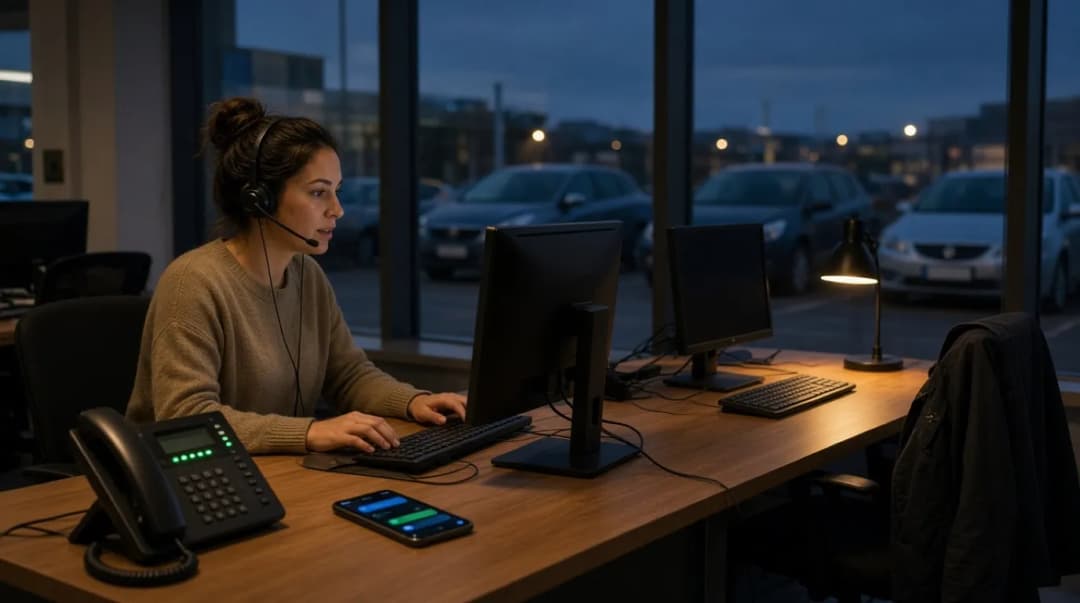
At seven Maya logs off. No verbal handover needed: the dealership has an AI activation schedule for each channel. During the day incoming chats are handled by people; from evening to morning, by the AI, which answers, collects details, offers an appointment when the calendar allows and prepares the summary for the next morning.
Before closing, Maya opens the conversation of a customer she has to call tomorrow and asks the internal assistant: “What happened with this customer?” The assistant knows which conversation she has open, gives her a summary and, when she asks, creates a callback task for 9:30. Tomorrow starts right there.
How AI changes the BDC representative role
The question people ask is whether AI will replace BDC reps. In Maya's day something else happens: the AI takes the repetitive part, meaning nights, data collection, summaries and routing, and leaves her the conversations that need a person. Trade-ins, undecided buyers, complaints, recall calls that need tact.
The work itself shifts. Less time retyping details, more time on the phone with customers who are ready. Control stays human: Maya takes a chat when she wants, and a person always decides when the AI comes back.
To see how this works channel by channel, there are pages on the AI phone agent for dealerships, WhatsApp for dealerships and lead management.
End-of-shift checklist for a BDC representative
- Every hot lead has an owner and a next step.
- No chat is sitting in “intervention requested” without someone on it.
- Today's appointments are in the calendar, not just promised in chat.
- Promised callbacks have a task with a date and time.
- Handoffs to sales or service include vehicle, reason and history.
- The AI is active on the channels planned for the evening.
FAQ
BDC representative: common questions
What people working in, hiring for or running a dealership BDC ask most often.
Want to see a BDC day with MIA?
In a demo we show the unified inbox, plain-language routing rules, human takeover and warm call transfers with a spoken briefing, on your dealership's channels.