Used Car Manager: From Trade-In to Front-Line Ready
A week in a used car department: cars reconditioned but not online, where the days go, and how photos taken right after prep change merchandising.
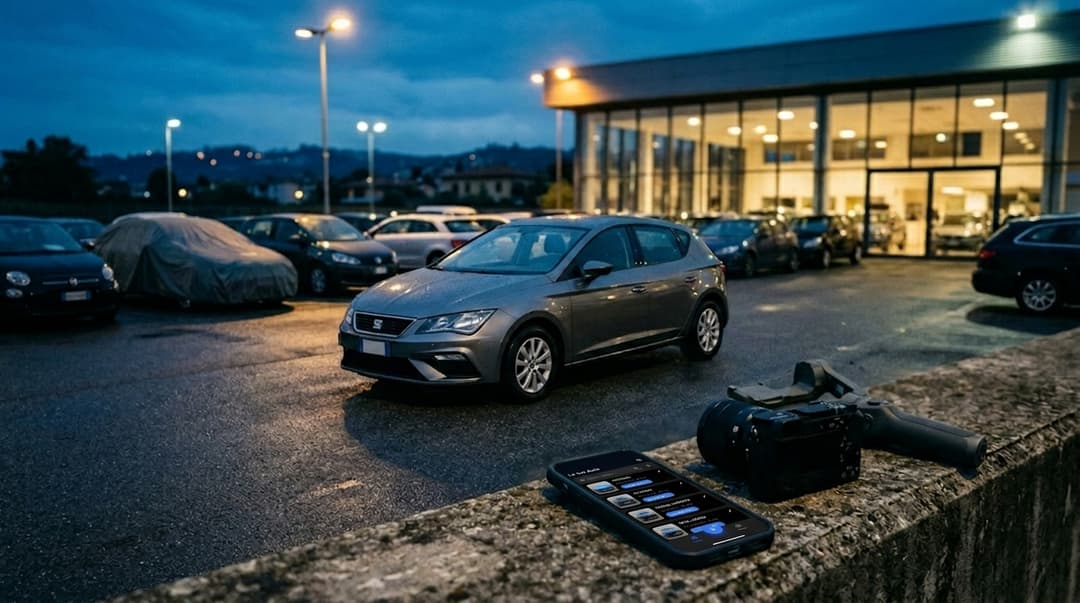
What a used car manager does, told through one week: eight cars reconditioned but invisible online, where the days are lost, photos right after prep, a better VDP, social ads for aged stock and what to measure.
It's 8:00 on a Monday. Tom pours a coffee, opens the stock report and the recon board side by side, and does what he does every Monday: he looks for cars that are ready but invisible. He's the used car manager at a mid-sized dealership, with around ninety used units on the ground. On paper, eight cars finished reconditioning last Thursday. On the website, none of them exist yet. This is his week, from trade-in to front-line ready, with the practical part for anyone who runs a used car department or wants to.
What does a used car manager do?
A used car manager runs the pre-owned department of a dealership: buying and appraising inventory, pricing it, managing reconditioning and making sure every car is merchandised and online as fast as possible. The goal is simple to state and hard to do: turn inventory quickly at a healthy gross, without letting cars age on the lot. Most of the job is managing time, because every day a car sits it costs money.
In practice, the week is made of these tasks:
- Acquiring inventory: trade-in appraisals, auctions, direct purchases from customers.
- Pricing: setting and adjusting prices against the market and the car's age in stock.
- Reconditioning: deciding what each car needs, approving costs and pushing it through service and detail.
- Merchandising: photos, description, VDP (vehicle detail page), listing portals and ads.
- Managing aged inventory: spotting the cars that aren't moving and deciding what to do with them.
- Leading the team: salespeople, lot attendants, the recon coordinator, sometimes the photographer.
8:20 – Eight cars that exist only on the lot
Tom walks the lot with the list. The eight cars are there, washed and detailed: a Toyota Camry, two Honda CR-Vs, a Nissan Rogue, a Jeep Grand Cherokee and three more. They're clean, inspected, priced. But nobody has taken their photos, because the person who does photos was covering deliveries on Friday, and on Saturday it rained.
Tom does the math he doesn't like doing: eight cars, four days each, nobody online could see them. Reconditioned is not the same as front-line ready. A car that can't be seen on the website can't generate a lead.
What does front-line ready mean?
Front-line ready means a used car is fully prepared to be shown and sold: inspected, reconditioned, detailed, priced and merchandised online with a complete set of photos. Some dealerships use the term only for the physical side (the car is on the front line, clean and safe). Tom uses the stricter version: if the VDP isn't live, the car isn't ready.
- Inspection completed and documented.
- Mechanical and cosmetic reconditioning done.
- Detailed inside and out.
- Priced and entered in the dealer management system.
- Photographed with the full shot list.
- VDP live on the website and listings live on the portals.
Where the days go: recon, photos, publishing queue
When Tom breaks down the time between trade-in and front-line ready, it falls into three blocks:
- Used car reconditioning: waiting for a service bay, parts on order, approval for extra costs, waiting for detail.
- Photos: the car is clean, but nobody is free to shoot it, the weather is bad, or the photo spot is blocked.
- Publishing queue: photos on a camera or laptop, waiting to be edited, renamed and uploaded.
Recon is the block everyone talks about. Photos and publishing are the ones that hide. For reference, there is an Italian market benchmark (Osservatorio Web Industry 2024): average used car time to market around 45 days, with 11 days between photos and publication versus 1 for the best operators. It's an Italian market benchmark, not a CarTake result and not a US figure, but the pattern Tom recognizes is the same: the tail end of the process, after the car is already clean, can take longer than anyone expects. The full analysis is in the article on used car time to market.
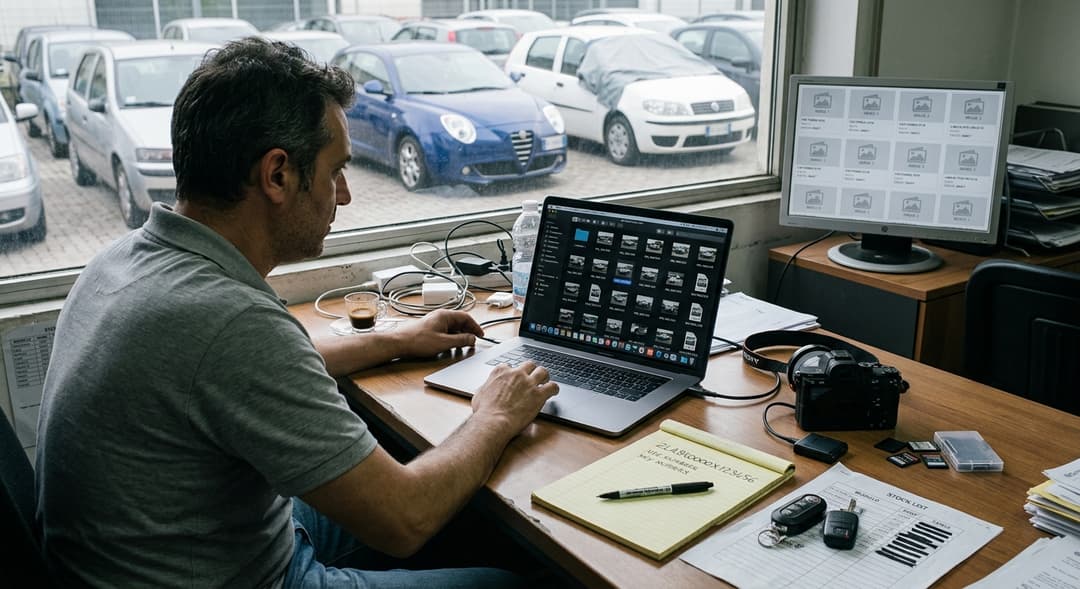
9:00 – A new rule: photos right after prep
Tom changes one rule. From today, when a car leaves the detail bay it goes straight to the photo spot, before it's parked in a row. Ana, the lot attendant, shoots it there with the CarTake Photo app: she scans the VIN, follows the guided shot sequence and the app flags any blurred or under-exposed shot before she moves the car.
There's no editing step anymore. Each photo is processed as soon as it's taken (the CarTake pages state 30 to 60 seconds per image): background removed, car placed in the dealership's Digital Room, license plate hidden or replaced with the dealer plate as the store decides. Then the photos are delivered automatically through the dealership's integrations to the website and the portals. A car that leaves detail in the morning can go live the same day.
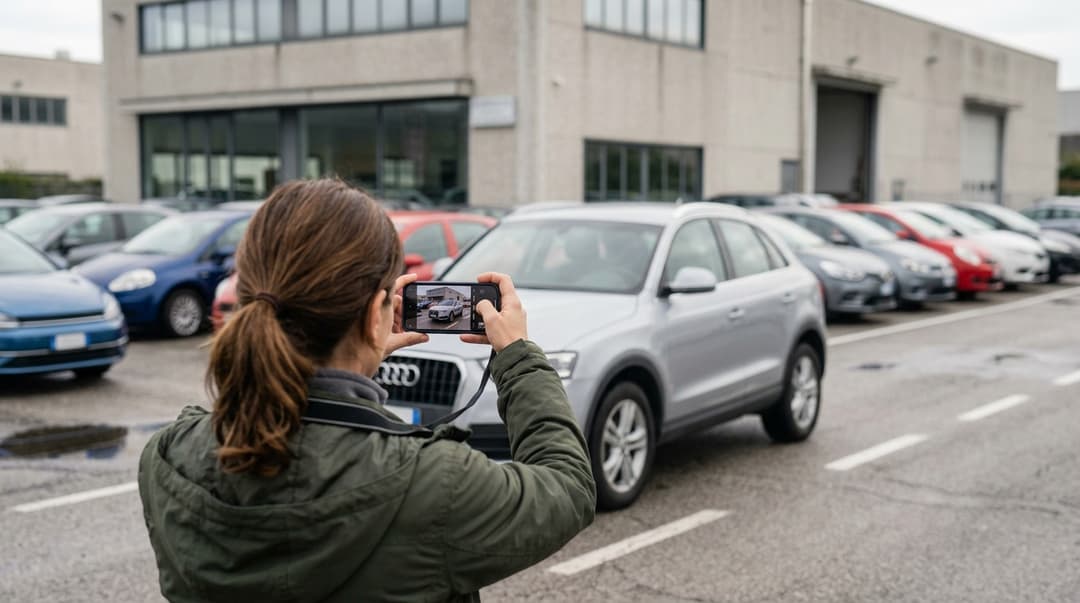
By 4 p.m. the eight cars from last week are photographed. Tom doesn't treat that as a miracle; he treats it as a process that finally has no waiting step between clean car and online car. More about the approach on the page on AI photos for dealerships.
Dealership merchandising: what a good VDP needs
Dealership merchandising is everything that makes a car look worth a visit online. For Tom it comes down to the VDP (vehicle detail page), because that's where the shopper decides whether to call, chat or move on.
- A complete, consistent photo set: same angles and same setting on every car, so the inventory looks like one store.
- A clean cover photo: the front three-quarter, in the Digital Room, with the plate handled.
- Interior and details: dashboard, seats, trunk, odometer, wheels.
- Defects shown honestly: they avoid surprises and wasted appointments.
- A 360° view of the vehicle, for shoppers who want to look around the car before visiting.
- A video generated from the photos, usable on the VDP, the portals and social.
- A description that matches the photos: equipment, history, what was reconditioned.

Thursday – Aged stock gets a second push
On Thursday Tom reviews aging. Six cars have been on the lot longer than he wants. Two get a price change. For the other four, the problem may be visibility, so he picks them and CarTake creates the ads with their photos and publishes them on Meta (Facebook, Instagram), TikTok and Google. Tom chooses the cars and the campaigns; CarTake builds and publishes the car ads on social.
He'll know next week whether it helped, by looking at the VDP views and leads for those four cars in his own tools. Not before.
What a used car manager should measure
Tom keeps a short list. The numbers come from the dealer's own systems, website analytics and portal dashboards, and he compares them with his own starting point rather than outside averages.
- Time from arrival to front-line ready: from the day the trade-in is taken to the day the VDP is live.
- Recon time: from the start of reconditioning to the car leaving detail.
- Photos-to-live time: from the first photo to the listing being visible online.
- Share of inventory live with a complete photo set.
- Days in stock and aged units, reviewed every week.
- VDP views and leads per car, from the website and the portals.
Used car reconditioning checklist: from trade-in to VDP
- Day of trade-in: appraisal notes, keys logged, car checked in.
- Inspection: list of needed work, cost estimate, approval.
- Reconditioning: service, parts, cosmetic work, with a target date.
- Detail: inside and out, ready for the camera.
- Photos: straight from detail to the photo spot, full shot list, quality check before moving the car.
- Price and description: entered while the photos are processed.
- Live: VDP and portals checked the same day.
- Follow-up: if the car ages, review price, photos and visibility.
Friday – The review
On Friday afternoon Tom opens the same two screens as Monday. This time the list of cars that are ready but invisible is short: one car whose photos were taken late Thursday and are already processed. The recon board still has its problems, parts still arrive late, and a Grand Cherokee is still waiting for a windshield. But the days between clean car and online car are no longer the ones he loses without noticing.
That's the part of the job CarTake is built for: guided capture on the lot, processing and delivery, and the same photos feeding the VDP, the video, the 360° view and the ads. Tom still decides what to buy, what to fix and what to price. He just doesn't wait for photos anymore.
FAQ
Questions about the used car manager job
The questions people ask most about running a used car department, from trade-in to online listing.
How many of your cars are ready but not online?
In a demo we walk through your process from detail bay to VDP: guided capture, processing, delivery to your website and portals, video, 360° view and social ads.