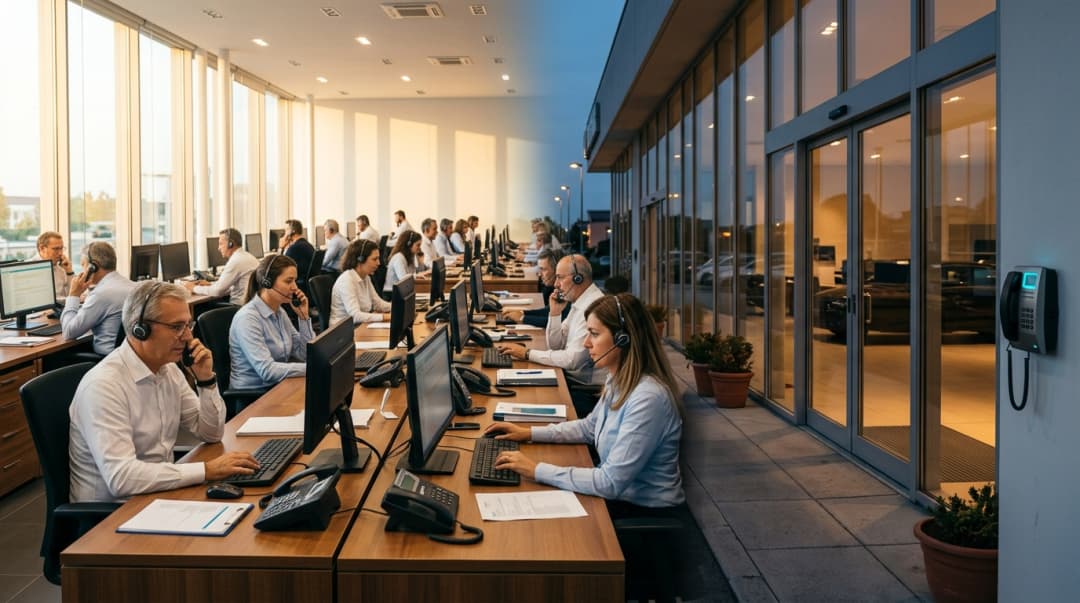
Fixed ops: a Monday morning in the service drive
A line at the counter, a phone that won't stop, a warning light, an urgent comeback and a recall bulletin to find: fixed ops seen through one service advisor's morning.
What fixed ops means at a car dealership, told through a Monday morning in the service drive: counter, phones, warning-light triage, the calendar, urgent cases and no-shows. With a write-up checklist and the fixed ops director's view.
Monday, 7:55 a.m. Dan rolls up the door of the service drive and there are already three cars in line. The phone rings before his computer has booted. He's been a service advisor at a dealership for eight years and knows Monday morning decides the week: who gets in, who waits, who calls and reaches nobody. This is his morning, and a practical look at fixed ops from the drive.
What is fixed ops at a car dealership?
Fixed ops (fixed operations) is the part of a dealership that keeps running regardless of car sales: service, parts and, where there is one, the body shop. Variable ops is new and used vehicle sales plus finance and insurance. Fixed ops revenue comes from repair orders and parts, and much of it starts with a service advisor, a phone line and a calendar.
Fixed ops vs variable ops: who does what
- Variable ops: new and used sales, F&I, the sales BDC. Revenue moves with how many cars are sold.
- Fixed ops: service department, parts department, body shop. Revenue comes from maintenance, repairs, warranty and recall work.
- Fixed ops director or manager: owns service and parts performance, staffing, technician capacity and customer retention after the sale.
- Service advisor: the customer-facing role in the service drive, writing repair orders, quoting work and keeping the customer updated.
8:00 a.m. – A line at the drive and a phone that won't stop
At the counter: a woman whose compact makes a noise when braking, a contractor who needs his van back by nine, and a walk-in who wants a tire swap. Meanwhile, the phone keeps going.
Until a few months ago Dan had two choices, both bad: answer and leave the customer at the counter waiting, or let it ring. Now, when the advisors' lines are busy, the call goes to the service department's AI voice agent. It answers on behalf of the dealership, works out what the caller needs and sends them down the right path.

8:10 a.m. – Warning light or oil change? Triage on the phone
The first call the AI takes is a customer with a warning light on the dash. The agent follows a triage path the service team set up: which light, does the car drive, is the customer stuck on the road. If the car can't move, the path leads to roadside assistance and towing; if it drives, it leads to a booking or a hand-off to an advisor.
The second is routine maintenance. Simpler: the AI checks availability in the service calendar and books. Before saving, it reads the phone number back to the customer and asks for confirmation. One wrong digit on a Monday is a customer nobody can call back.
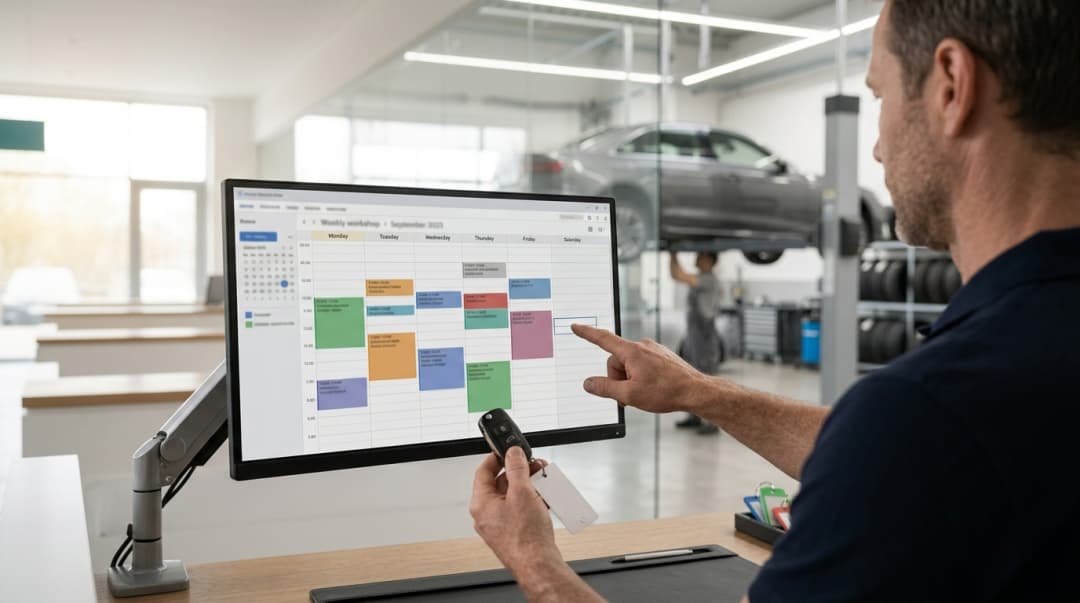
How the calendar decides what counts as an appointment
Not every booking is the same. The service calendar in MIA has three modes, set per service:
- Confirmed booking: if there's room, the appointment is confirmed immediately. Good for maintenance and standard jobs.
- Preferred time, to be confirmed: the customer suggests a time and an advisor confirms it. Good for jobs that need a look first.
- Information and callback: no appointment; details are collected and the service drive calls back.
Dan's calendar holds real appointments, with the requests he needs to confirm kept separate. The customer knows right away which case they're in.
8:40 a.m. – The urgent case reaches Dan, with a briefing
A customer calls: her car came out of service on Friday and this morning the warning light is back. That's not an automatic booking. A routing rule written in plain English, “customer with a problem after a repair,” says to transfer the call to an advisor.
She hears a hold message. Before the line opens, Dan hears a short spoken briefing: name, car, what happened, what she's asking for. When he picks up, nothing has to be repeated. The transferred leg is recorded. If Dan couldn't have answered, the AI would have offered her a callback.
What a service advisor collects at write-up
Whether the request arrives at the counter, by phone or on WhatsApp, the write-up should capture the same information. A basic checklist, to adapt to your store:
- Customer details: name, phone, email, consent to be contacted and preferred channel.
- Vehicle details: plate, VIN, make, model, mileage, in-service date.
- The concern in the customer's own words: symptoms, noises, warning lights, since when, under what conditions.
- Requested work and recommended work, kept separate, with an estimate or approved spending limit.
- Vehicle condition at drop-off: visible damage, fuel level, items left in the car.
- Timing: promised time, and any loaner or ride agreed.
- Warranty, open recalls or service specials to check.
- Customer authorization for approved work and how they want to be updated.
When the AI takes the booking, part of this arrives pre-filled: customer, contact, vehicle, reason. The advisor completes the rest with the customer in front of them.
9:30 a.m. – A recall question, answered from the documents
A customer at the counter asks whether his car is covered by a recall he read about online. The manufacturer's bulletin came in two weeks ago as a PDF, and Dan doesn't know it by heart.
He opens MIA's internal assistant and types: “Does the campaign on this model also cover 2021 builds?” The assistant searches the documents in the service department's archive, the ones the manager has made visible to the internal assistant, finds the bulletin and answers with a link to the source document. Dan opens the PDF, checks the line and answers the customer.
The same goes for service specials: when a promotion is uploaded from a PDF, MIA picks up its validity dates and marks it active, scheduled or expired. Expired offers drop out on their own.
The day before: reminders, and what happens with no-shows
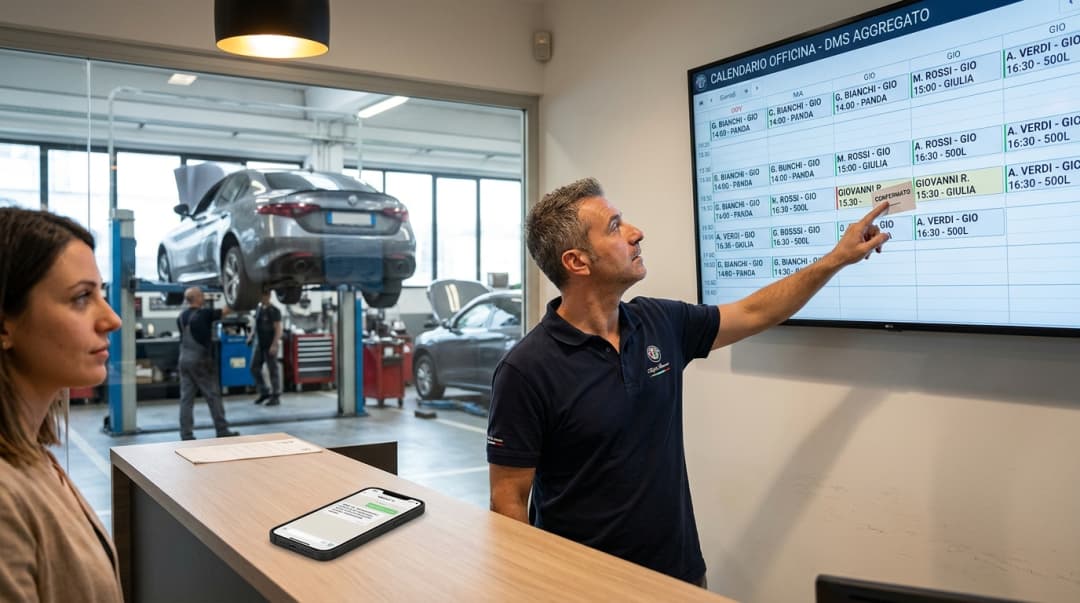
Many of today's appointments got a reminder yesterday by WhatsApp, email or push notification, sent from the calendar. Customers who needed to reschedule did it yesterday, and those slots were offered to someone else.
That leaves the no-shows. When the service drive marks an appointment as a no-show, the status change can trigger an automated flow: a WhatsApp message offering to rebook and, if the customer replies, the AI carrying on the conversation to a new appointment. Nobody has to remember to call. For timing and message templates, see the guide to appointment reminders on WhatsApp for dealership service.
11:00 a.m. – The fixed ops manager's view
Mid-morning, Karen, the fixed ops director, stops by. Her Monday looks different: technician capacity, bays, parts on order. But part of her job is knowing whether requests reach the drive in order or in chaos.
She watches a short list:
- Requests by channel and time of day: how many come by phone, WhatsApp and website, and when.
- Complete requests handed to the drive: customer, vehicle and reason already filled in, no call back needed to ask.
- Confirmed, rescheduled and no-show appointments, read from the calendar.
- Calls transferred to people and the most common reasons.
No complicated reporting needed: MIA dashboards are built from widgets, or by asking the internal assistant in plain language for a chart on conversation and CRM data.
What the service advisor does, and what the fixed ops director does
- Service advisor: greets customer and vehicle, writes the repair order, quotes work and timing, updates the customer, handles delivery.
- Shop foreman or service manager: dispatches work to technicians, manages bays, checks quality and timing.
- Fixed ops director: owns service and parts results, staffing and customer retention across the department.
- Together: the advisor promises times the shop has to be able to keep. The cleaner the calendar, the fewer broken promises.
How AI changes the service advisor's job
AI doesn't replace the service advisor. It doesn't see the car, hear the brake noise or calm the upset customer at the counter. It does take away what splits the advisor in two: the phone ringing while a customer is standing there. It sorts warning lights and breakdowns, books maintenance, collects accurate details and passes Dan the cases that need a person, with a briefing.
To go further: AI for dealership service departments, AI phone agent for dealerships, the guide to AI phone answering for dealerships and service and our overview of digital solutions for the automotive aftermarket.
12:30 p.m. – The line is gone
By half past twelve the counter is empty. The morning's cars are in the shop, the calls were handled, the urgent cases got a person. Dan opens Tuesday's calendar: it's filling up, and the appointments the AI took by phone already have a confirmed phone number.
FAQ
Fixed ops and the service drive: common questions
What people in dealership service and parts ask most often about fixed ops, service advisors and AI.
A Monday morning with fewer phones at the counter?
In a demo we show MIA in the service drive: voice agent with triage, calendar bookings, warm transfers with a briefing, reminders and no-show follow-up.
Related solutions